
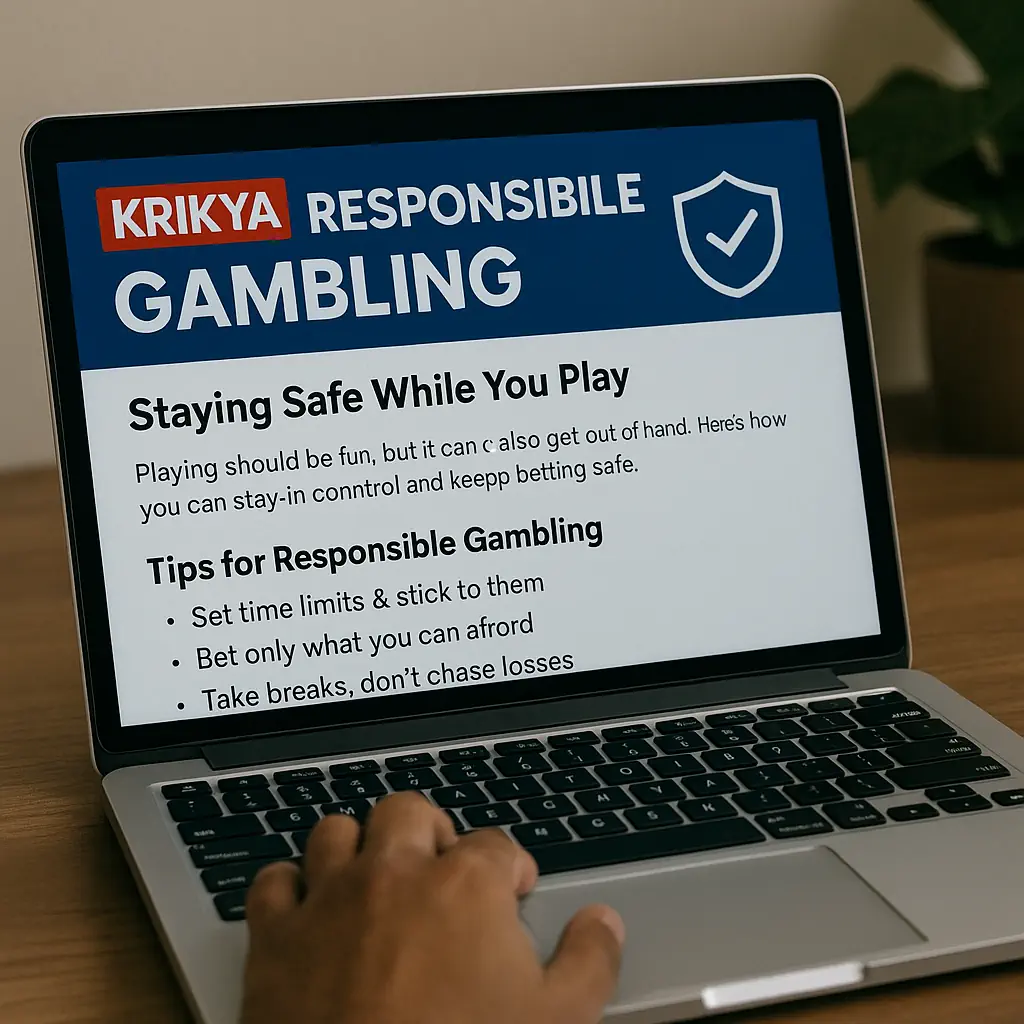
There is a subtle transition that happens to many bettors—a quiet slide into a state of total immersion. It starts when the glow of the screen becomes your entire world, the ambient noise of your room or the street outside simply vanishes, and a sudden score change or a spinning wheel captures your focus with an almost hypnotic intensity. In that fleeting moment, reality recedes, and it feels as though a curtain has been drawn, leaving nothing but the game center stage.
The thrill of betting has always possessed this kind of power; it isn't inherently harmful, but it is intense. It is like the electric anticipation in a stadium just as the bowler begins his approach, or the searing heat of a pan right before the spices hit the oil. It is a perfect rush when balanced, but it can easily overwhelm you if you lose your grip on the controls.
Like the first surge of energy in a stadium when the bowler starts his run-up.
Like the heat rising from a pan just before the spices hit the oil.
Perfect in balance, overwhelming when you forget who’s holding the handle.
Responsible gambling isn't about following a rigid set of rules or reacting to flashing warning signs. Instead, it’s more like an internal compass—a quiet intuition that steers you back to safety when things start to feel a bit hazy. Let's be real: nobody logs into Krikya intending to lose control. Most people play for perfectly normal reasons, whether it's to blow off steam, satisfy a curiosity, follow a routine, or simply find a spark of excitement in a dull day.“Today I’ll lose control.” People play for a dozen normal reasons: curiosity, stress relief, routine, excitement, the need to break up a long day.
However, emotions don't operate on logic. This is especially true in Bangladesh, where cricket is woven into the fabric of family life, where weekends are paced by match schedules, and where the pressures of the everyday make a brief mental escape feel like a necessity.
Especially not here in Bangladesh, where cricket sits at the heart of family conversations, where weekends swing around match schedules, and where the weight of everyday life makes escapes — even small ones — feel necessary.
Krikya speaks candidly about responsible play because they have seen the real-world consequences of losing that balance. This isn't based on theory, but on observing actual people. They've seen how an evening of lighthearted fun can spiral into a draining, obsessive session. They've seen a positive mood turn into restlessness, and a small loss transform into a personal vendetta that must be won. Eventually, that internal voice telling you to stop becomes a whisper you can no longer hear.“Time to stop” — goes quiet until you can barely hear it.
This isn't a lecture on setting limits; it's a conversation about learning to recognize your own patterns while you're in the heat of the game.
It’s a conversation about recognizing yourself inside the game.
The Hidden Side of Betting: The Emotional Truth We Rarely DiscussThe Truth About Emotion in Betting — The Part People Rarely Admit
Many players like to believe that betting is a purely analytical pursuit—a game of odds, statistics, and strategic matchups. While that happens occasionally, more often than not, emotion sneaks in disguised as 'strategy.' It's a gut feeling pretending to be math, or a mood masquerading as a calculated decision.
You might place a bet on a cricket match because Shanto looked in great form tonight, or because you believe the Bangladesh team thrives under pressure, or perhaps just because you feel a certain 'vibe' about the game. You might hit a slot machine because the sounds evoke a nostalgic memory, or because you're chasing a quick hit of adrenaline after a grueling workday, or simply because the silence of your room feels too heavy to bear.
You tap a slot because its sound reminds you of an old fairground, or because you’re chasing that short hit of excitement after an exhausting day, or because silence feels heavier than the spin.
Feeling emotion isn't the problem. The danger lies in pretending those emotions aren't influencing your choices.
Pretending it doesn’t exist — that’s where players slip.
True responsible gambling begins with an honest assessment of your 'internal weather'—the emotional state you bring to the table before you even place your first bet.
Are you feeling drained? Stressed? Bored? Are you chasing a lost win, or perhaps trying to avoid a problem in your personal life?
Stressed?
Bored?
Chasing something?
Avoiding something?
Krikya doesn't want you to treat betting as something separate from your actual life, because it isn't. Some days you are focused and clear-headed; other days you are clouded, impulsive, or vulnerable.
Simply knowing which state you are in is half the battle.
The Thin Line Between Enjoyment and Excess—And How Your Mood Shifts ItThe Line Between Fun and “Too Much” Is Thin — and Moves With Your Mood
Most people imagine a breaking point as a sudden, dramatic crash. In reality, it's much more gradual. It starts with thoughts that seem harmless at first:
It starts subtly, with thoughts that sound innocent:
“I’ll just win back what I lost.” “Just one more spin, I can feel a win coming.” “This match is bound to turn around for me.” “My luck has to change soon.”“I’ll just win back the last round.”
“One more spin, I’m close.”
“This match owes me a turnaround.”
“My luck can’t stay this bad.”
The moment you find yourself arguing with the screen, you've stopped playing a game and started negotiating with fate. Once you reach that point, you've already lost your balance.
This is why Krikya is designed to feel composed and steady. There are no aggressive alarms, no high-pressure tactics, and no intentional chaos.
No flashing alarms.
No pressure.
No chaos by design.
When the environment is quiet, it becomes much easier to hear your own reason.
Why Krikya Prioritizes Responsible Gaming (Without the Preaching)Why Krikya Takes Responsible Gambling Seriously (Without Being Preachy)
The team at Krikya has analyzed thousands of sessions—from the high-energy nights of the BPL to the impulsive weekend surges and quiet weekday afternoons. They have seen players at their most disciplined and their most volatile. While other platforms treat responsible gambling as a legal obligation to be checked off a list, Krikya integrates it into the very fabric of the user experience.
The objective isn't to discourage you from playing; it's to ensure that playing remains a positive experience.
The goal is to keep playing enjoyable.
There’s a difference.
There is no guilt-tripping, no lecturing, and no moralizing.
No lecturing.
No “you must” preaching.
It is simply a platform designed to keep you grounded while you enjoy the thrill of the game.
A Breakdown of Common Emotional TriggersA Table That Sums Up the Real Triggers People Face
Not the formal list — the human one.
| Trigger | How It Feels | Risk Behind It |
| Fatigue | “I just need a distraction.” | You stop making clear decisions |
| Stress | “Let me escape for a bit.” | Using betting as a way to fix your mood rather than for genuine entertainment |
| Winning streak | “I can’t miss now.” | Allowing overconfidence to drive impulsive, oversized wagers |
| Losing streak | “I’ll get it back.” | Falling into an emotional spiral by trying to chase previous losses |
| Boredom | “Why not?” | You bet without intention |
Once you start identifying these triggers, you reclaim control—not through restrictive rules, but through self-awareness.
The Unspoken Discipline: Knowing When to Walk Away While WinningThe Discipline No One Talks About: Stopping During a Win
It is widely understood that stopping during a losing streak is difficult. However, there is a surprising truth: stopping while you're ahead is often even harder.
But here’s the surprising fact: stopping during a win is even harder.
There is a certain intoxication that comes with momentum—the feeling that you are perfectly in sync with the world. Whether consciously or not, you start to believe the winning streak is a reflection of your own energy, timing, or instinct.
That is exactly when people push past their limits without even realizing it.
Responsible gambling isn't about quitting the moment you start winning; it's about quitting intelligently.
It’s about quitting smart.
A successful session is one where you walk away while the experience is still positive, rather than waiting until the emotional temperature reaches a boiling point.
The Cultural Context: Why Losses Can Feel Heavier in BangladeshWhy Losses Hurt More in Bangladesh — The Cultural Layer
People in Bangladesh are known for their passion, loyalty, and deep sense of competition—but also for being overly critical of themselves. A lost cricket match can feel like a personal failure, and a wrong prediction can sour a mood for the entire day. A losing streak isn't viewed as a statistical probability; it feels like a challenge from destiny.
When you add this to the pressures of daily life—family duties, career stress, the grind of commuting, and the weight of inflation—a financial loss can trigger an emotional reaction that far outweighs the actual amount of money lost.
In this context, responsible gambling is more than just discipline; it is a way of protecting your mental health.
It’s protecting your mental space.
Krikya recognizes the cultural significance behind every deposit and every bet. That is why the platform avoids manipulative design, aggressive push notifications, and any tactics intended to lure you deeper into the game without thinking.
It is a space built for self-mastery, not for seduction.
The Silent Support: Tools That Work in the BackgroundThe Tools That Help — Even If You Don’t Notice Them
While some platforms boast loudly about their safety features, Krikya takes a more understated approach. The platform uses subtle design cues to encourage healthier behavior:
- The interface isn’t aggressive.
- The color palette is designed to be calming rather than overstimulating.
- Odds updates are clean and clear, avoiding distracting flashes.
- The flow between different sessions is smooth and intuitive, preventing a feeling of chaos.
- Essential information is always available without being intrusive.
When reminders or limits are triggered, they are framed as stabilizing supports rather than sources of guilt.
The most effective safety environment is one that supports the player without constantly shouting about it.
The Psychology of 'One More Round'—The Danger of a Simple PhraseThe Psychology of “One More Round” — The Most Dangerous Three Words
Let’s be honest: we’ve all said it. Whether it's about betting, eating, or scrolling through social media, we all do it with things that trigger the brain's reward system.
About betting.
About food.
About scrolling on social media.
About almost everything that stimulates the brain’s reward circuits.
“One more” isn't actually about the next round. It's a resistance to closing the loop. Your brain wants to stay locked into the dopamine cycle, and breaking that cycle feels like leaving something unfinished.
It’s about refusing to close a loop.
Your brain wants to stay inside the dopamine cycle.
Breaking that cycle feels like interrupting something unfinished.
Krikya’s philosophy acknowledges this psychological trap and builds the experience around it. This is why the platform feels steady and measured rather than frantic; it provides the space you need to pause, breathe, and reset.
The phrase “one more” is only truly dangerous when the platform is designed to amplify that urge.
Here, it doesn’t.
Distinguishing Between Fun and TroubleWhen Playing Is Fun — And When It Stops Being Fun
If you need a single rule of thumb to evaluate your habits, let it be this:
If you can close the app and still feel good about your day, you are playing responsibly. If the idea of walking away feels painful or anxious, something is wrong.If you can walk away and still feel good, you’re playing responsibly.
If walking away feels painful, something’s off.
Pay attention to that feeling. It is an emotional indicator, not a mathematical one.
It’s emotional, not mathematical.
The entertainment ends the moment you feel you are no longer in control.
Many players only realize this after a bad experience, but you don't have to hit rock bottom to see the signs. Your body knows, your mood knows, and even the way you grip your phone changes when you're stressed.
Responsible gambling is simply the act of applying that awareness early.
The Invisible Role of KrikyaThe Role Krikya Plays — The Part You Don’t See
Behind every seamless withdrawal and predictable bonus, there is a team monitoring patterns—not to restrict players, but to safeguard them.
When the system detects a dramatic shift in behavior—such as frantic, late-night deposits or erratic activity—it quietly slows things down. This isn't a punishment; it's a protective measure.
Krikya views betting as a form of entertainment that comes with an emotional responsibility. The objective isn't to keep you playing as long as possible, but to help you maintain a healthy rhythm.
The goal isn’t to maximize playtime.
It’s to maintain a healthy rhythm.
When that rhythm is broken, the platform steps in quietly to help you find your balance again.
A More Transparent Perspective on Responsible GamblingA More Honest Way to Look at Responsible Gambling
Many people view responsible gambling as a mere safety precaution—something like a seatbelt that feels restrictive until an accident happens. However, that comparison doesn't quite capture the reality.
That’s not the right metaphor.
It is actually more akin to the way we breathe. Gasping too quickly triggers panic, while breathing too shallowly drains your strength. When you find your natural rhythm, everything else simply clicks into place.
If you breathe too fast, your body panics.
If you breathe too slow, you lose energy.
If you breathe naturally — things fall into place.
Think of responsible gaming as finding that same steady cadence in your play:
- you’re aware of your limits,
- you enjoy the moments,
- you stop when your energy dips,
- you treat wins as pleasant surprises,
- it means accepting that losses are simply a natural part of the game's cycle,
- and ensuring that the outcome of a session never dictates how you feel about yourself.
At its core, betting should be a form of leisure—not a reflection of who you are, a cure for your problems, a war to be won, or a matter of destiny. It is simply a choice to enjoy a moment of excitement.
Not therapy.
Not battle.
Not fate.
Just a moment you choose to enjoy.
Closing Without Closing the Topic
Practicing responsible gambling isn't a lesson you complete once and forget; it is a mindful habit you bring with you every time you log into the app.
It’s something you practice every time you open the app.
There will be days when it feels second nature and others where you have to be consciously disciplined. Some moments you'll feel completely centered, while at other times you might notice yourself losing focus.
Some days it takes awareness.
Some days you’ll feel perfectly balanced.
Some days you’ll catch yourself drifting.
The key is maintaining that inner clarity amidst the excitement—as long as you can stay mindful, you remain the one in charge.
This philosophy is exactly what drives Krikya. We've built a platform that avoids pressure, manipulation, or aggressive pushing, providing instead a balanced environment where you can play with a calm and human approach.
a platform that doesn’t push you, doesn’t pressure you, doesn’t manipulate you.
Just a space that lets you play responsibly, calmly, humanly.
Ultimately, the most successful sessions aren't defined by the size of the payout, but by the fact that you walked away with your peace of mind intact.
They’re the sessions where you remain you.